Are you interested in understanding what a Push is and how it affects your bets? In short, a Push occurs when the outcome of an event results in a tie (a draw) in the context of the bet.
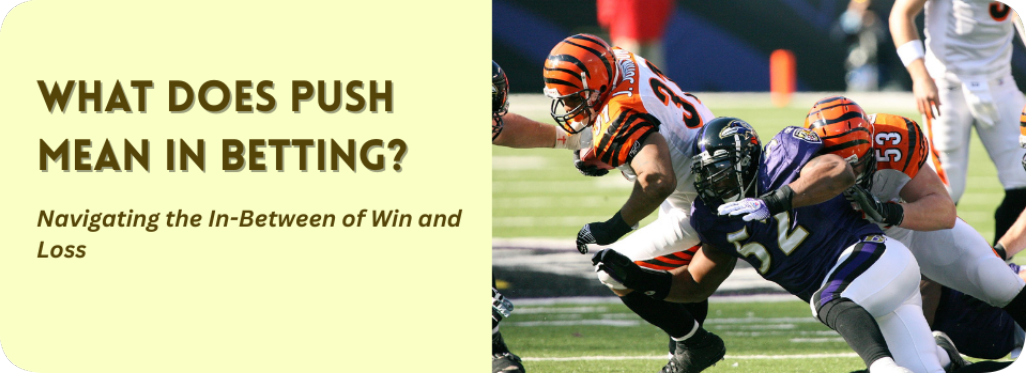
Photo by Matti Slotte
As players or participants in competitions, we accumulate victories and dread losses. We are all familiar with such mottos as “the joy of victory and the bitterness of defeat.” You may have also heard the saying, “winning isn’t everything, it’s the only thing that matters.” However, in betting, there’s another possible outcome: the Push.
Note! Sometimes, sports events conclude not with a win or a loss, but with a draw. Overtime and penalty shootouts have reduced the frequency of draws in many sports, but occasionally, the outcome remains a tie. How do betting companies handle these situations?
What is a Push in Betting?
A Push in betting happens when the result of the event leads to a tie, sometimes referred to as a “no-action” bet. This means that neither the bettor nor the bookmaker wins or loses, and the original stake is returned to the bettor.
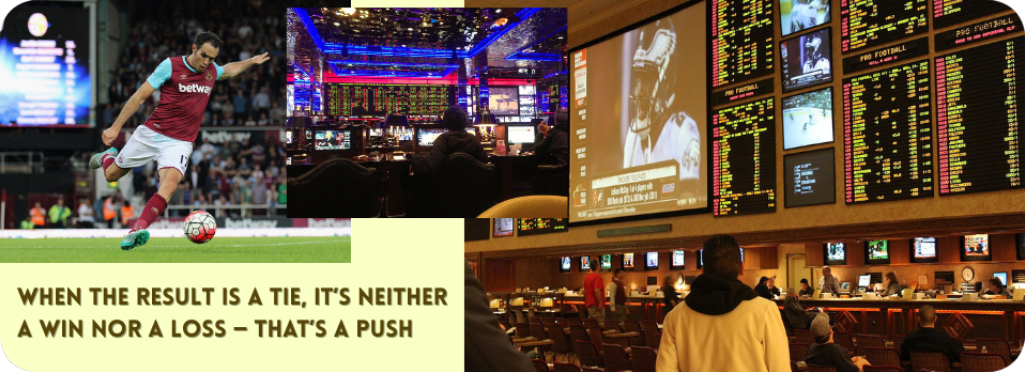
Photo by Matti Slotte
For instance, if you bet on the point spread in an NFL match between the Dallas Cowboys and the New York Giants, set at +/-3 points, there is a possibility that the game could end with a score of 17-14, 20-17, or 24-21 in favor of Dallas. Each of these outcomes would result in a Push.
“A tie isn’t always bad. In betting, it can be less painful, especially if the bet would have been a loss,” says sports analyst Matti Slotte from KasinoBonus gambling magazine.
Ties also frequently occur in total bets. If the Los Angeles Dodgers are playing against the Washington Nationals with Clayton Kershaw and Max Scherzer on the mound, the total might be set at six. A Dodgers win with a score of 4-2 would be a win for the Dodgers, but a Push for bets on the over or under. There are some exceptions, but most bookmakers follow the same approach when handling a Push.
What to Do Next with a Push Bet?
Simple bets (or single bets) that result in a Push are returned. This is straightforward: if you bet on Tampa Bay +7 against New Orleans, and the Saints win 28-21, both parties receive a refund. Similarly, if the total in a Tampa Bay vs. New Orleans match is set at 49, then bets on “over” and “under” will result in a Push, and players who made these bets will receive a refund.
Photo by Matti Slotte
Moneyline bets also result in a Push in the case of an actual tie. For example, if the Patriots are the favorites at -250 against the Jets at +240, and the teams end the game in a 20-20 tie, both bets are returned.
In the case of parlays and teasers, the situation becomes slightly more complicated.
How Do Betting Companies Handle Ties in Multi-Event Bets?
Players might receive odds of 6/1 if they win a three-leg parlay, and 12/1 for a four-leg parlay. What happens if you win three out of four events in a bet, but one results in a Push?
Most betting companies simply remove the tie from the parlay or teaser and pay out the bet as if it were a multi-event bet with one fewer event. Thus, a four-leg parlay with three wins and a Push would pay out the same as a winning three-leg parlay. Although you were expecting odds of 12/1, you would receive 6/1 if the Push is excluded from the bet.

Photo by Matti Slotte
Important! While this policy seems fair and logical, some bookmakers consider ties in parlays and teasers as losing bets. This is especially common with parlay cards created at the beginning of the week and available for betting until the start of the game on Saturday or Sunday.
Ultimately, you should always read the fine print. Know exactly how your betting company handles Pushes before placing your bet.
Of course, the likelihood of encountering a Push in a parlay increases if you include more events in your bet. A 10-team parlay has 10 chances for a Push, while a two-event parlay has only two.
“ports betting is always a game of probabilities. A Push is not a loss, but it’s not a win either. It gives you a chance to get your stake back,” explains sports expert Mark Dash from DashTickets NZ gambling journal.
What Do You Get from a Push?
If your goal is always to win, you might want to avoid Pushes altogether. If you’ve spent time watching a long sports event and wagered a few dollars, a refund might seem like a waste of time if the match ends in a tie. On the other hand, a tie is clearly better than a loss, especially if you bet frequently and primarily care about return on investment.
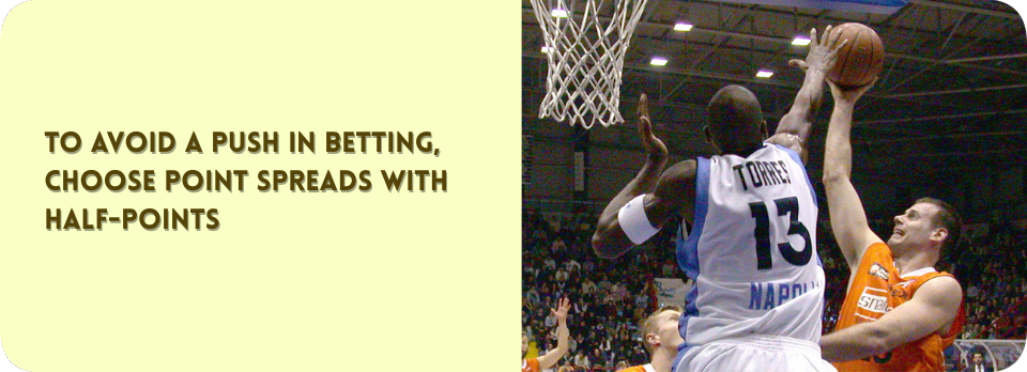
Photo by Matti Slotte
The simplest way to avoid Pushes is to bet on point spreads that include a half-point, also known as a “hook.” There will never be a Push with a 2.5 or 3.5 point spread or a total of 47.5. If you can’t find a point spread or total with a hook, you can usually buy a half-point. You might have to pay a small vig, but it often makes sense to pay -125 for -2.5 instead of -110 for 3.
While moneyline bets occasionally result in a Push, this happens rarely. Currently, there are no ties in the NBA, NHL, or MLB. In the NFL, there was one tie last year, two in 2018, and none in 2017. The chances of a Push on moneyline bets in major leagues are very low.
Finally, some sports, especially football, offer three-way betting. You can bet on one team to win, the other team to win, or a tie. Just remember that if you choose a team to win in a three-way bet, a Push will result in a loss, not a refund.
Go for the Win, Accept the Push
Ultimately, a Push is not so bad. It gives you a free informational element that you can analyze and learn from. However, this is only relevant if your betting company refunds your stake in case of a Push. Always read the terms carefully before placing your bet.
View more free tips for 15-09-2026

Rakow

Zaglebie

Genoa

Sudtirol

Grasshoppers

Sion
Alaves
Valencia

Ajax
Willem II

Korona Kielce

Gornik Zabrze
Motherwell
Aberdeen
Hibernian
Kilmarnock
Fiorentina
Pisa

Elche

Real Madrid
Leave a Reply